Posts

Showing posts with the label landfill gas

Landfill Gas to Renewable Energy
Image
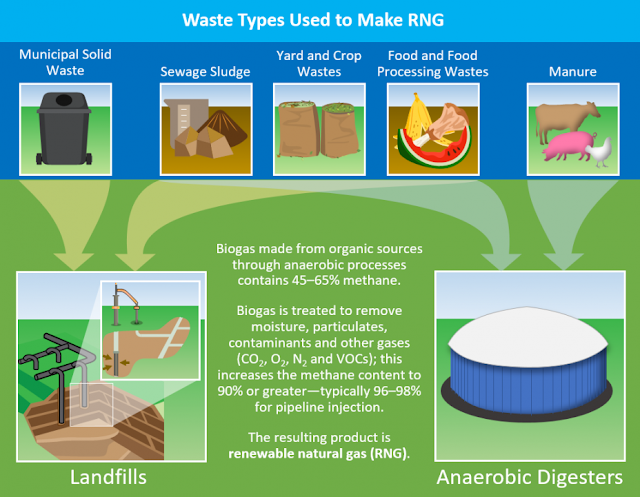
Landfill gas (LFG) is a natural byproduct of the decomposition of organic waste in landfills. It consists of methane, carbon dioxide, and other organic compounds. Methane (CH4) is a significant component of LFG that is more than 25 times as potent as carbon dioxide (CO2) at trapping heat in the atmosphere. Methane is a potent greenhouse gas (GHG) and a significant contributor to global warming. While LFG can be harmful to the environment, it can also be harnessed as a valuable source of renewable energy. Many landfills collect and treat LFG to generate electricity or heat while reducing environmental impact. Landfill gas to energy (LFGTE) - Landfill gas to energy is a process that involves capturing and converting the methane gas produced by the decomposition of organic waste in landfills into usable energy, typically electricity or heat or producing renewable natural gas (RNG). LFGTE projects not only help reduce the emission of methane, but they also provide a source of renewable ene...
Waste to Energy

Image
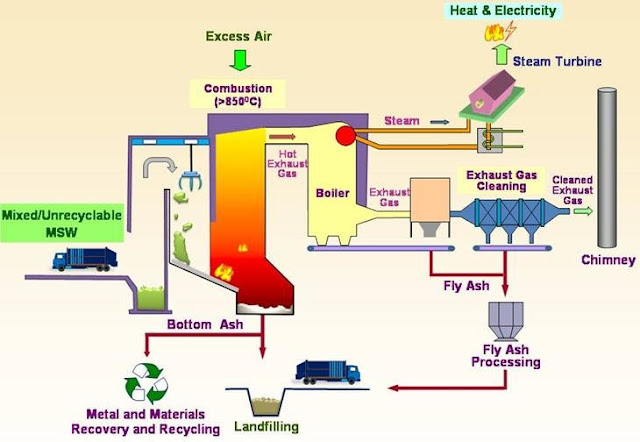
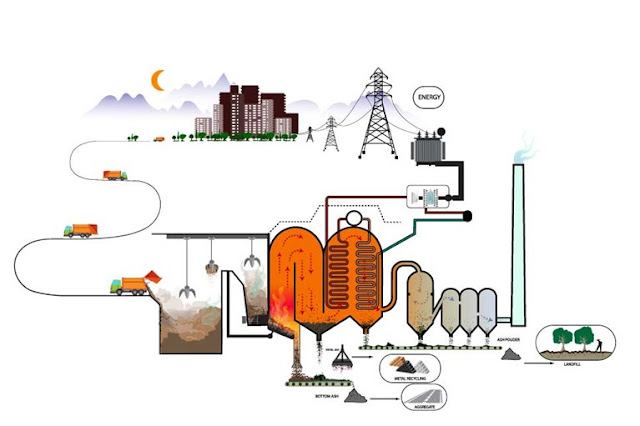
Waste-to-energy  (WTE)  plants burn municipal solid waste (MSW), which is trash, to produce steam in a boiler, and the steam is used to power an electric generator turbine. MSW is a mixture of energy-rich materials such as paper, plastics, yard waste, and products made from wood, etc. WTE is a process that involves converting various types of solid waste materials into usable energy, typically in the form of electricity and heat. This approach helps address two key issues: the disposal of waste and the generation of renewable energy. Mass burn facilities are the most common type of WTE combustion facility in the world. The waste used to fuel the mass burn facility may or may not be sorted before it enters the combustion chamber. Many advanced facilities separate the waste on the front end to save recyclable products, but this is not required and adds significant cost to the process without any significant environmental benefits. Here's how waste to energy works: 1.  ...

Comparison between waste to energy and landfill to energy

Image
Waste-to-energy (WTE) and landfills both have impacts. WTE is a controlled process that reduces greenhouse gases (GHG) and recovers valuable resources. Landfills releases harmful chemicals that can be controlled by various technologies to produce renewable resources. Both WTE and landfills  are critical aspects of environmental conservation and sustainability. Each approach has its advantages and disadvantages, which should be considered when making decisions about how to manage waste. Waste-to-energy Advantages: Energy Generation: WTE facilities can produce electricity and heat, contributing to the local energy supply.  Reduces Land Use: WTE facilities typically require less land compared to landfills.  Lower Greenhouse Gas Emissions: While not emission-free, WTE can reduce greenhouse gas emissions compared to Methane from landfills.  Waste Reduction: It helps to reduce the volume of waste that ultimately ends up in landfills. Reduces fossil fuel use: WTE facilitie...