Posts

Showing posts with the label carbon dioxide

Comparison between waste to energy and landfill to energy
Image
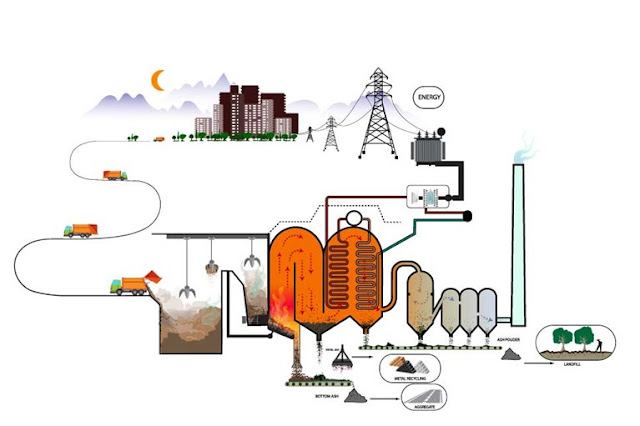
Waste-to-energy (WTE) and landfills both have impacts. WTE is a controlled process that reduces greenhouse gases (GHG) and recovers valuable resources. Landfills releases harmful chemicals that can be controlled by various technologies to produce renewable resources. Both WTE and landfills  are critical aspects of environmental conservation and sustainability. Each approach has its advantages and disadvantages, which should be considered when making decisions about how to manage waste. Waste-to-energy Advantages: Energy Generation: WTE facilities can produce electricity and heat, contributing to the local energy supply.  Reduces Land Use: WTE facilities typically require less land compared to landfills.  Lower Greenhouse Gas Emissions: While not emission-free, WTE can reduce greenhouse gas emissions compared to Methane from landfills.  Waste Reduction: It helps to reduce the volume of waste that ultimately ends up in landfills. Reduces fossil fuel use: WTE facilitie...
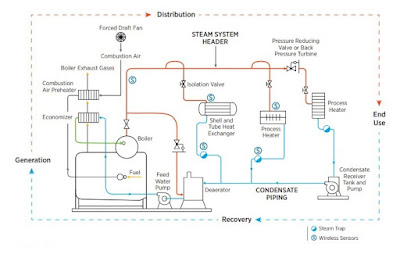
How to improve steam generation, distribution and recovery can help a plant to increase its steam system efficiency by as much as 20-30%

Image
  Common areas for energy savings opportunities are steam generation, distribution, end use and recovery. This article outlines some typical energy efficiency measures. Demand reduction A plant’s boilers may be producing more steam or steam at a higher pressure than is necessary for the end uses. Understanding process requirements is especially important when downstream improvements, such as insulation and increased condensate return, are implemented. Lower losses translate into changes in steam production. A case study was conducted that a process engineer determined that a steam header pressure of 125 psig was no longer necessary due to changes in some of the plant’s processes. A team of personnel from the maintenance, utilities and production departments evaluated the feasibility of reducing the header pressure and decided to incrementally decrease header pressure, while monitoring the effects of this change on system performance. The pressure was reduced twice, first to 115 psi...